

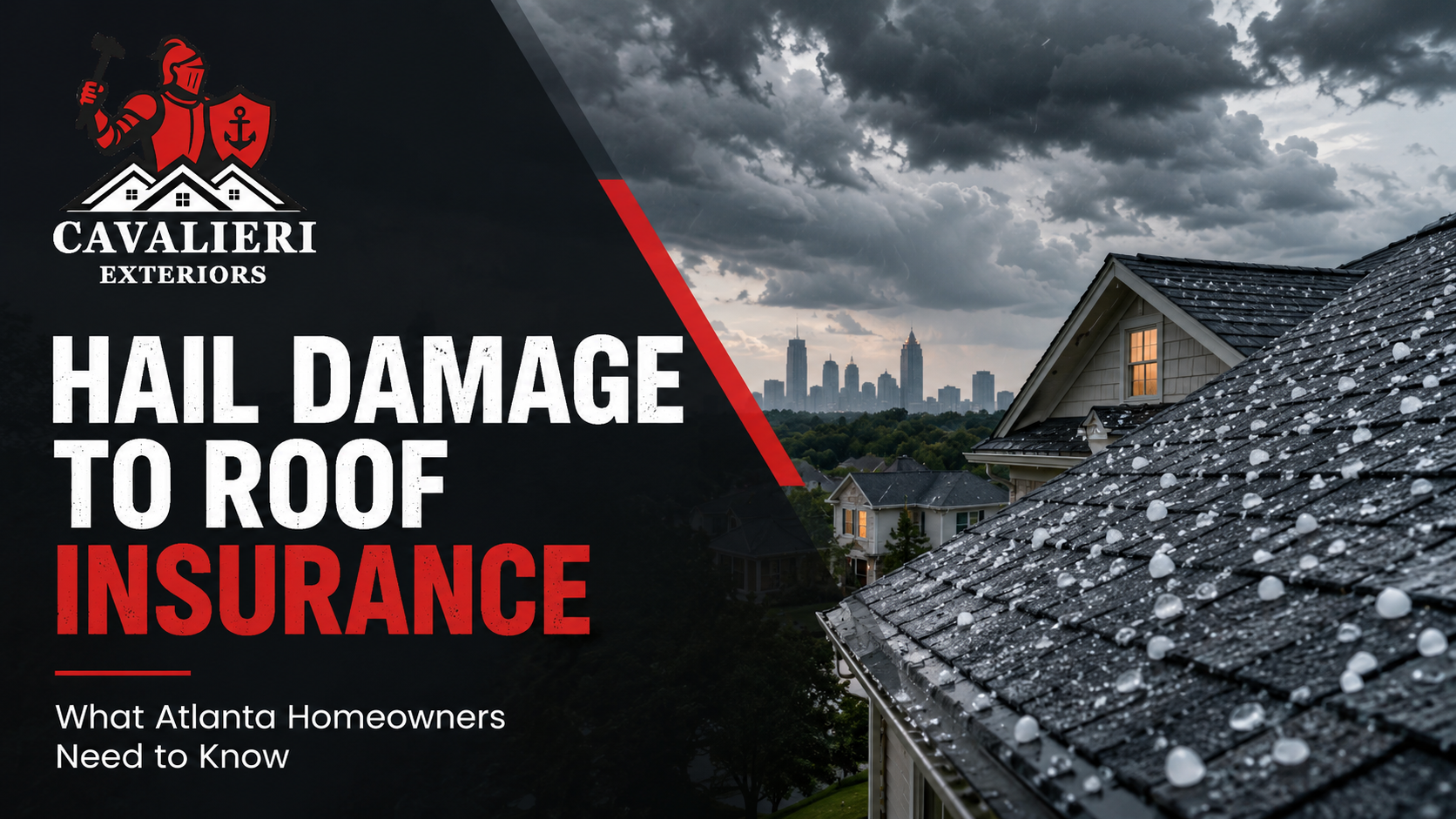
When a strong storm moves through the Atlanta area, one of the first things homeowners should think about is whether their roof was damaged. Hail damage is not always obvious from the ground, but even small impacts can weaken shingles, loosen granules, damage flashing, or create problem areas that may lead to leaks later.
For homeowners, understanding how roof insurance works after hail damage can make the repair or replacement process much easier. Knowing what to look for, how to document damage, and when to contact a trusted roofing contractor can help protect your home, your insurance claim, and your peace of mind.
At Cavalieri Exteriors, we help homeowners throughout Atlanta and the surrounding communities inspect storm damage, understand repair options, and navigate the roofing process with confidence.
Understanding Hail Damage to Roofs
Hail can cause serious roof damage, especially when storms bring high winds, heavy rain, and repeated impact. The amount of damage depends on several factors, including the size of the hail, wind speed, roof age, roof material, and the condition of the shingles before the storm.
Even if your roof does not appear damaged from the street, hail can still affect the life of your roofing system.
Common Signs of Hail Damage
Some signs of hail damage are easy to spot, while others require a professional roof inspection. Homeowners should look for:
Granule loss on shingles
Hail can knock protective granules off asphalt shingles, leaving exposed areas that may age faster.
Bruising or soft spots
A bruised shingle may feel soft or damaged beneath the surface, even if it is not visibly cracked.
Cracked, lifted, or missing shingles
Storms can crack shingles, loosen them, or tear them away completely.
Dented gutters, downspouts, or flashing
Metal components often show visible signs of hail impact.
Damage around vents, chimneys, and skylights
Flashing and roof penetrations are vulnerable areas that should be checked after a storm.
Water spots or leaks inside the home
Interior water stains may indicate that storm damage has already allowed water into the roofing system.
Factors That Affect Hail Damage
Not every roof reacts to hail the same way. The severity of damage can depend on:
Roof material
Asphalt shingles may lose granules or crack, while metal roofs may dent but remain functional.
Roof age
Older roofs are often more vulnerable because shingles become brittle over time.
Hail size and wind speed
Larger hailstones and wind-driven hail can cause more severe damage.
Roof pitch and slope
The angle of the roof can affect how hail impacts the surface.
Previous roof condition
A roof with existing wear, lifted shingles, or weak spots may suffer more damage during a storm.
Does Homeowners Insurance Cover Hail Damage?
In many cases, standard homeowners insurance policies include coverage for hail damage. However, coverage depends on your specific policy, deductible, roof age, and whether the insurance company determines the damage is functional or cosmetic.
Most policies may include coverage for:
Dwelling coverage
This typically applies to the roof and main structure of the home.
Other structures
Detached garages, sheds, fences, or similar structures may also be covered depending on the policy.
Interior damage
If hail creates an opening that allows water into the home, some interior damage may be covered.
Because policies vary, homeowners should review their coverage or speak directly with their insurance provider.
Understanding Deductibles and Policy Limits
Before filing a hail damage roof claim, it is important to understand your deductible. This is the amount you are responsible for paying before insurance coverage applies.
Some homeowners have a standard deductible, while others may have a separate wind or hail deductible. In some policies, the hail deductible may be a percentage of the home’s insured value rather than a flat dollar amount.
You should also review your policy limits, replacement cost coverage, actual cash value terms, and any exclusions related to cosmetic roof damage.
How to File a Hail Damage Roof Insurance Claim
If you believe your roof was damaged by hail, acting quickly can help protect your home and strengthen your documentation.
1. Document the Damage
Take photos and videos of visible damage around your home. This may include shingles, gutters, siding, downspouts, screens, fences, and any interior water spots.
2. Schedule a Professional Roof Inspection
A roofing contractor can inspect the roof safely and look for damage that may not be visible from the ground.
3. Contact Your Insurance Company
Notify your insurance provider about the possible storm damage. They will explain the next steps and may schedule an adjuster inspection.
4. Meet With the Insurance Adjuster
The adjuster will inspect the property and prepare an estimate based on the damage they find.
5. Review the Insurance Estimate
Compare the adjuster’s estimate with your contractor’s findings. If something is missing, your contractor may be able to provide additional documentation.
6. Schedule Repairs or Replacement
Once the claim is approved, you can move forward with roof repairs or replacement.
7. Keep Records
Save photos, estimates, invoices, receipts, claim documents, and all communication related to the claim.
Why a Professional Roof Inspection Matters
After a hailstorm, a professional roof inspection is one of the best ways to understand the condition of your roof. Hail damage can be subtle, and waiting too long can allow small issues to turn into bigger problems.
A professional inspection can help:
Identify hidden roof damage
Determine whether repairs or replacement may be needed
Provide documentation for the insurance process
Help prevent leaks and future structural damage
Give homeowners a clear plan for the next steps
At Cavalieri Exteriors, we inspect storm-damaged roofs carefully and help homeowners understand what is happening before they make a decision.
Choosing a Roofing Contractor After Hail Damage
Choosing the right contractor is an important part of the insurance and repair process. Homeowners should work with a roofing company that is experienced, professional, and familiar with storm-related roof damage.
Look for a contractor that is:
Licensed and insured
Experienced with hail and storm damage
Knowledgeable about roofing materials and repair options
Able to provide detailed documentation
Backed by strong reviews and references
Clear about warranties and workmanship
Cavalieri Exteriors works with homeowners to provide honest inspections, clear communication, and quality exterior solutions.
Working With Your Contractor and Insurance Adjuster
A trusted roofing contractor can help identify storm damage and provide an estimate that reflects the work needed to restore your roof properly. While your insurance company determines coverage, your contractor can help make sure visible and hidden damage is documented.
Good communication between the homeowner, contractor, and adjuster can help reduce confusion and make the process smoother.
Roof Materials and Hail Resistance
Different roofing materials respond to hail in different ways. If you are replacing your roof after storm damage, it may be a good time to consider materials that offer better long-term durability.
Asphalt Shingles
Asphalt shingles are one of the most common roofing materials for residential homes. They are affordable, widely available, and easy to repair. However, hail can cause granule loss, cracking, bruising, or shingle displacement.
Metal Roofing
Metal roofs are durable and long-lasting, but hail may leave visible dents. In some cases, the damage may be cosmetic, while in others it can affect performance.
Wood Shingles and Shakes
Wood roofing can split, crack, or puncture under hail impact. It often requires more maintenance than asphalt or metal roofing.
Tile and Slate Roofs
Tile and slate can last a long time, but individual tiles may break from hail. These materials can also be more expensive to repair or replace.
Cost Considerations for Hail Damage Repairs
The cost of hail damage repairs depends on the size of the roof, the type of material, the severity of the damage, roof pitch, labor, and whether a full replacement is needed.
Common cost factors include:
Roof size
Material type
Number of damaged shingles or roof sections
Flashing and ventilation repairs
Hidden moisture damage
Labor and accessibility
Insurance deductible
Because every roof is different, the best way to understand cost is to schedule an inspection and receive a detailed estimate.
Preventing Future Hail Damage
No roof is completely storm-proof, but homeowners can take steps to reduce future damage and maintain their roof.
Consider these prevention tips:
Schedule regular roof inspections
Replace damaged or aging shingles
Keep gutters clear
Trim overhanging branches
Address small repairs quickly
Ask about impact-resistant roofing materials
Review your insurance policy annually
In hail-prone areas, Class 4 impact-resistant shingles may be worth considering for added protection.
Insurance Tips for Atlanta Homeowners
If you live in the Atlanta area, storm preparation is an important part of protecting your home. Hail, wind, and heavy rain can all affect your roof.
Here are a few insurance tips to keep in mind:
Review your policy before storm season
Know your deductible
Document your roof condition with photos
Save records of maintenance and repairs
Report damage promptly
Understand the difference between cosmetic and functional damage
Work with a reputable local roofing contractor
Common Questions About Hail Damage Roof Insurance
Does homeowners’ insurance cover all hail damage?
Not always. Coverage depends on your policy and the type of damage. Functional damage is more likely to be covered than purely cosmetic damage.
How long do I have to file a claim?
This depends on your insurance policy. Many policies require homeowners to report damage promptly, so it is best not to wait.
Can I choose my own roofing contractor?
Yes. Homeowners can usually choose their own roofing contractor. It is important to select a company that is licensed, insured, and experienced with storm damage.
Will insurance cover a full roof replacement?
It depends on the extent of the damage and the terms of your policy. If the roof has widespread functional damage, replacement may be approved. If the damage is limited, repairs may be recommended.
Can hail damage cause leaks later?
Yes. Hail damage can weaken shingles and roofing components, which may lead to leaks over time if the damage is not repaired.
Schedule a Hail Damage Roof Inspection With Cavalieri Exteriors
If your home was recently hit by hail or strong storms, do not wait until a small issue becomes a major repair. Cavalieri Exteriors can inspect your roof, document visible storm damage, and help you understand your repair or replacement options.
Our team is committed to honest communication, quality workmanship, and helping homeowners protect their homes after severe weather.
Call Cavalieri Exteriors today at 770-589-4902 or visit www.cavalieriexteriors.co to schedule your roof inspection.
Conclusion
Hail damage to your roof can be stressful, especially when insurance is involved. By knowing the signs of damage, documenting the issue, reviewing your policy, and working with a trusted roofing contractor, you can move through the process with more confidence.
For Atlanta-area homeowners, Cavalieri Exteriors is here to help inspect storm damage, explain your options, and provide dependable roofing solutions when your home needs protection most.