

How to Figure Roof Square Footage – A Homeowner’s Guide from Cavalieri Exteriors
If you’re planning a roof replacement, filing an insurance claim, installing solar panels, or simply budgeting for future maintenance, one of the first questions you’ll need answered is:
How many square feet is my roof?
Understanding how to calculate roof square footage is helpful — but it’s also one of the most common places homeowners underestimate costs or materials.
At Cavalieri Exteriors, we provide professional roof inspections and measurements across Hiram, Marietta, Dallas, and the greater Northwest Atlanta area. Whether you're comparing quotes or planning a project, knowing how roof measurements work helps you make informed decisions.
In this guide, we’ll explain:
Why roof square footage matters
The difference between footprint and actual roof area
How pitch affects measurements
How roofing “squares” work
Why professional measurements often save money
Safety considerations every homeowner should know
Why Roof Square Footage Matters
Roofing materials aren’t priced randomly — they’re calculated by area.
Knowing your roof size helps with:
Accurate contractor quotes
Comparing roofing estimates
Insurance claim verification
Solar panel planning
Budgeting for replacement
Ordering correct material quantities
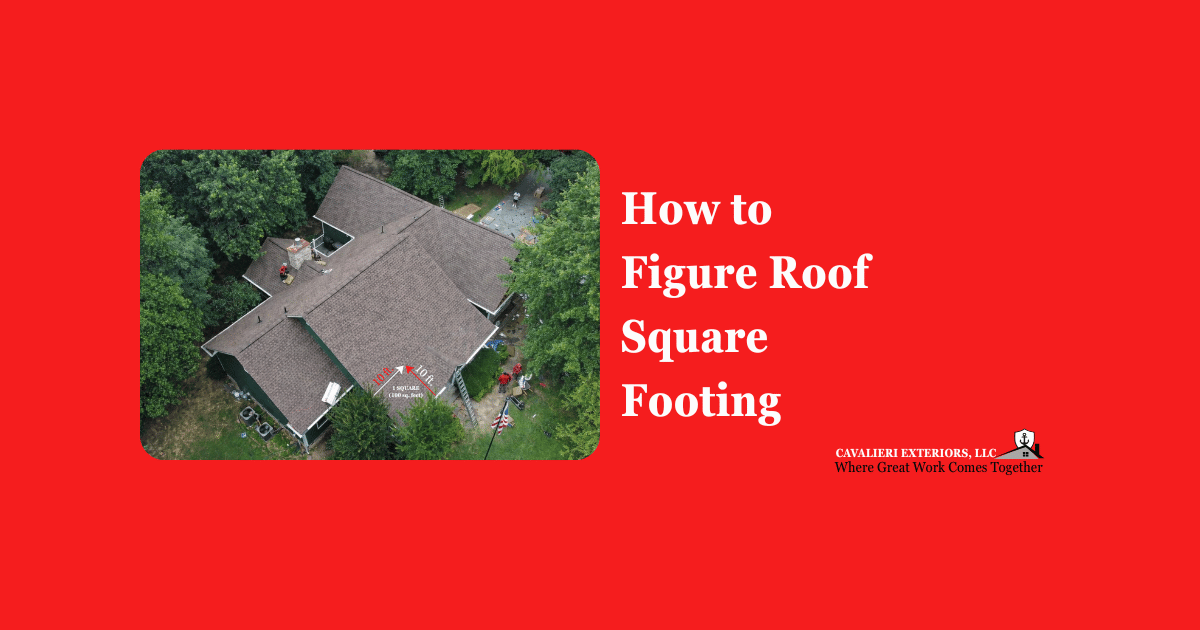
In the roofing industry, materials are sold in “squares.” 1 roofing square = 100 square feet of roof surface.
If your roof is 2,100 square feet, that equals 21 roofing squares. But here’s where many homeowners get tripped up: Your roof’s footprint is not the same as its actual surface area.
Understanding Plan Area vs. Actual Roof Area
There are three important terms to understand:
1. Plan Area
This is the flat, top-down measurement of your home — the footprint.
2. Roof Pitch
Pitch describes how steep your roof is, expressed as a ratio like 6:12.
A 6:12 pitch means the roof rises 6 inches for every 12 inches of horizontal run.
3. Actual Roof Area
Because pitched roofs are sloped, the actual surface area is larger than the footprint.
If you only measure the footprint and ignore pitch, you’ll underestimate materials.
How Roof Pitch Changes Square Footage
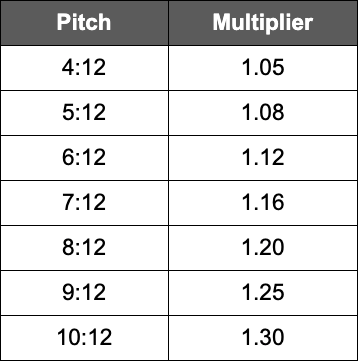
Here’s a quick pitch multiplier reference:
Example:
If your home footprint is 1,800 sq ft and your roof pitch is 6:12:
1,800 × 1.12 = 2,016 sq ft of actual roof area
That difference can mean several extra bundles of shingles — which affects cost.
Ground-Level Estimation (Safer Method)
For simple gable-style homes, you can estimate from the ground.
Step 1 – Measure the Footprint
Measure the length and width of your home.
Example:
40 ft × 30 ft = 1,200 sq ft
Step 2 – Add Overhangs
Most roofs extend 6–12 inches beyond the walls.
Add that overhang before multiplying.
Step 3 – Apply Pitch Multiplier
Multiply the adjusted footprint by your pitch factor.
Step 4 – Add Waste Factor
Roofing always requires extra material.
10% waste for simple roofs
15–20% for complex roofs
Example:
2,000 sq ft × 1.10 = 2,200 sq ft needed
Roof Complexity Matters
Homes in Hiram and surrounding areas often include:
Dormers
Valleys
Multiple ridgelines
Garage tie-ins
Porch additions
Each of these increases material waste and labor complexity.
A roof with multiple valleys may require 15–20% extra material compared to a simple two-slope gable roof.
This is why professional estimates are more accurate than simple square footage math.
Safety First: Should You Measure from the Roof?
We do not recommend that untrained homeowners climb their roof to measure.
Georgia roofs can be:
Steep
Hot and slick in summer
Dangerous after rain
Risky without harness systems
Even experienced roofers use safety gear and fall protection.
If you’re unsure, ground measurement or professional drone measurement is far safer.
Professional Roof Measurements: Why They’re More Accurate
At Cavalieri Exteriors, we use:
On-site inspection
Drone imaging
Pitch verification tools
Software-assisted measurement systems
This allows us to:
Account for every ridge and valley
Calculate exact square counts
Identify damaged decking
Evaluate ventilation needs
Reduce material overage
Accurate measurement means accurate pricing — no surprises.
Common Mistakes Homeowners Make
Ignoring the roof pitch
Forgetting overhangs
Underestimating the waste factor
Measuring in unsafe conditions
Assuming footprint equals roof size
Even small miscalculations can add hundreds or thousands of dollars in error.
Example: Full Calculation from Start to Finish
Let’s walk through a typical Georgia home:
Footprint (with overhang):
42 ft × 28 ft = 1,176 sq ft
Garage:
22 ft × 22 ft = 484 sq ft
Total Plan Area:
1,660 sq ft
Pitch: 7:12 (1.16 multiplier)
1,660 × 1.16 = 1,925.6 sq ft
Waste Factor (10%):
1,925.6 × 1.10 = 2,118 sq ft
Convert to roofing squares:
2,118 ÷ 100 = 21.18 squares
Order 22 squares.
When to Call a Professional
If you’re:
Planning a roof replacement
Filing a storm damage claim
Comparing roofing estimates
Installing solar
Unsure about roof age or condition
It’s time for a professional inspection.
At Cavalieri Exteriors, we provide free roof inspections and accurate measurements throughout Hiram, Marietta, Dallas, Acworth, Kennesaw, and all of Northwest Atlanta, GA.
Conclusion
Learning how to figure roof square footage helps you understand the roofing process — but precise measurement requires more than a tape measure.
Your roof’s slope, valleys, flashing, decking condition, and ventilation all affect material needs and pricing.
The safest and most accurate approach?
Let professionals measure it correctly the first time.
If you're considering roof repairs or replacement, Cavalieri Exteriors is here to help with transparent pricing, expert installation, and long-term protection built for Georgia weather.